How to Inspect a Deck Before Summer in South Jersey
The Short Answer: Inspect the Connections Before the Boards
Before opening a South Jersey deck for summer gatherings, inspect the parts that keep it attached to the house and standing on its supports—not just the boards that are easiest to see. From the ground and walking surface, look for movement, decay, loose fasteners, damaged railings, unstable stairs, and water-management problems where the deck meets the siding. If anything shifts under normal use, stop using the deck and have a qualified professional evaluate it.
A quick visual review is useful maintenance, but it is not a structural certification. Do not climb beneath an elevated deck, open concealed connections, or attempt repairs to a ledger, beam, post, or guardrail if you are not comfortable doing so safely. Our deck services can help document the condition and separate routine maintenance from work that needs a more complete repair or rebuild.
Start with the Ledger and House Connection
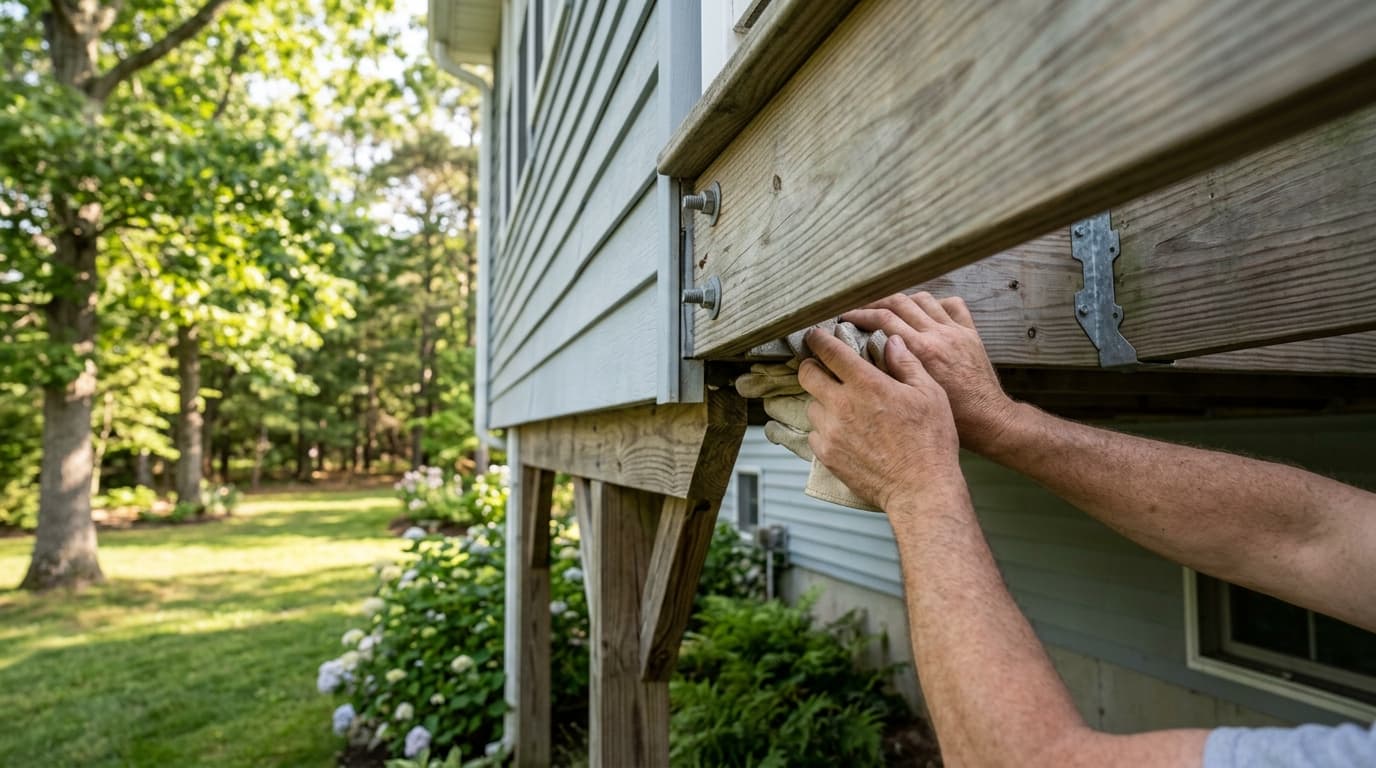
The ledger is the board that commonly connects an attached deck to the home. It deserves special attention because water can collect at the wall connection and because a problem there can affect the whole deck. From a safe position, look for a visible gap between the ledger and the house, loose or missing fasteners, crushed or split wood, rusted hardware, staining, soft areas, or a deck that appears to pull away from the wall when people walk on it.
Check the transition between the deck and exterior wall for signs that water is getting behind the cladding: bubbling paint, swollen trim, dark staining, or persistent dampness. A good-looking deck surface does not rule out concealed damage. The American Wood Council’s prescriptive deck construction guide illustrates the importance of proper ledger attachment and flashing. Use it as technical background, not as permission to modify a connection without a qualified assessment.
Check Posts, Beams, Joists, and the Surface
Walk the deck slowly and notice whether any area feels springy, bouncy, or uneven. Look for cracked, split, or rotting boards, exposed screw heads, lifted fasteners, fungal growth, and areas that stay wet after the rest of the deck dries. Pay particular attention to board ends, stair stringers, post bases, beam ends, and places where dirt or leaves hold moisture. Probe only accessible surface wood gently with a screwdriver if you know how to do so safely; do not force tools into structural members or remove protective finishes to search for damage.
From the yard, inspect whether posts remain plumb and whether their bases are standing in water, soil, or deteriorated concrete. Look for beams that appear bowed and joists that have shifted. In coastal communities, salt air and wind-driven rain make regular inspection especially valuable, but inland homes also experience freeze-thaw cycles, humidity, and heavy summer storms. If damage is widespread rather than limited to one replaceable board, ask for an evaluation before covering it with paint or a new surface.
Test Railings and Stairs Without Taking Risks
Guardrails and stairs are safety systems, not decorative details. From the deck surface, apply ordinary hand pressure to each accessible railing section and post. A guard that rocks, has a loose connection, or has a visibly split post needs attention before the deck is used. Inspect balusters for missing pieces and look for openings or damaged components that could create a fall or entrapment hazard. Never lean your full body weight against a questionable railing to “test” it.
On stairs, check that treads are secure, stringers are not visibly split or decayed, and handrails do not move. Make sure the landing and bottom step are not undermined by erosion or standing water. Keep stairs clear of planters, hoses, and loose outdoor rugs. If the deck is high, the stairs are steep, or a railing is unstable, keep children and guests off the area and call a qualified contractor rather than attempting a quick cosmetic fix.
Planning a project in South Jersey?
Get a free, detailed estimate from a licensed NJ contractor — no pressure, no sales pitch.
A South Jersey Deck Inspection Checklist
Use this checklist once each spring and again after a major wind or rain event. Photograph anything that changes so you can compare it over time:
- House connection: Look for gaps, staining, loose fasteners, damaged flashing, or movement at the ledger.
- Structure: Check accessible posts, beams, joists, and stair stringers for rot, splits, bowing, or unusual movement.
- Surface: Replace or repair only clearly isolated damaged boards; widespread softness needs a professional assessment.
- Railings: Apply light hand pressure and confirm posts, rails, and balusters are secure without leaning over the edge.
- Stairs: Check tread stability, handrails, lighting, and the ground at the bottom of the stairs.
- Drainage: Clear leaves and debris, and confirm downspouts do not discharge against posts, footings, or the house connection.
- After storms: Look for fallen limbs, shifted components, new cracks, missing fasteners, and water intrusion at the wall.
Mark the deck “off limits” when there is structural movement, a failed guardrail, severe rot, a damaged stair, or uncertainty about whether the deck is safely supported. A contractor should explain the observed condition, the recommended sequence, and which repairs require permits or inspections in your municipality. New Jersey’s Department of Community Affairs Codes & Standards resources and construction permit resources are useful starting points, but the local construction official determines requirements for the actual property and scope.
Repair, Rebuild, or Replace? Ask for a Scope-Based Answer
A single loose board or piece of trim may be a maintenance item. A compromised ledger, rotted beam, unstable post, or failed stair system is a different class of work because it affects the deck’s load path and safety. Do not accept a proposal that covers structural damage with new decking without explaining what happens below the surface. Conversely, do not assume every weathered board requires a complete rebuild; the right answer depends on the extent and location of damage.
When comparing proposals, ask the contractor to identify the components being repaired or replaced, how hidden damage will be handled, whether temporary support is required, what fasteners and flashing are specified, who coordinates permits and inspections, and how the work will protect the house’s weather barrier. For storm-related damage, our storm-damage services can help organize an inspection; keep dated photos and avoid discarding damaged material before documenting it if you may need to discuss the loss with your insurer.
When to Schedule a Professional Inspection
Schedule a professional evaluation before summer use when the deck moves, the ledger or posts show decay, stairs or guardrails are loose, the house connection leaks, or the deck has been altered without clear records. Also get advice before adding a hot tub, enclosed roof, heavy planters, or another concentrated load. Those changes can affect the structure and permit scope; they are not simply furnishing decisions.
For homes in Egg Harbor Township, Ocean City, Margate, and nearby South Jersey communities, a documented inspection is a better starting point than a surface-only quote. Use our contact page to request a scope review, and ask for a clear explanation of what is safe to use now, what should be repaired first, and what local approvals may apply.