How to Choose a Sump Pump Backup for a South Jersey Home
The Short Answer: Match the Backup to the Failure You Fear
The best sump pump backup for a South Jersey home depends on what is most likely to stop your primary system: a power outage, a failed pump, a blocked discharge line, or water arriving faster than one pump can remove it. A battery backup is often the simplest response to short outages. A water-powered pump provides a different kind of redundancy where municipal water pressure and plumbing conditions make it appropriate. A generator can support the primary pump and other essential loads, but it brings fuel, transfer equipment, placement, and testing decisions.
Do not choose by horsepower or advertising alone. Document how water reaches the pit, where the discharge runs, how often the pump operates, whether the home loses power during storms, and whether the basement or crawl space has other moisture paths. Our basement services can help coordinate a moisture and finish plan, but a backup pump does not replace correcting grading, gutters, foundation seepage, or plumbing leaks.
Start with the Water and Power Conditions at Your House
Watch the system during and after rain from a safe, dry position. Note whether the primary pump cycles briefly or runs for long periods, whether the pit rises close to the start level, and whether water appears outside the basin. Check that the discharge outlet is not buried, frozen, crushed, or sending water back toward the foundation. Never reach into a sump pit or handle a pump, cord, or outlet with wet hands.
Map the failure points. If your neighborhood loses electricity during wind events, battery capacity and generator compatibility deserve attention. If the pump fails while power remains on, a second pump with a separate float and discharge strategy may be more useful than a larger battery alone. If the basin fills rapidly, capacity, discharge routing, and the drainage system should be reviewed by a qualified professional.
FEMA's flood-map resources provide regional flood-risk context, but a mapped designation does not predict the water path at one house. Ready.gov's flood guidance supports making a household plan before an event. Use both alongside your home's drainage history.
Compare Battery, Water-Powered, and Generator Backup
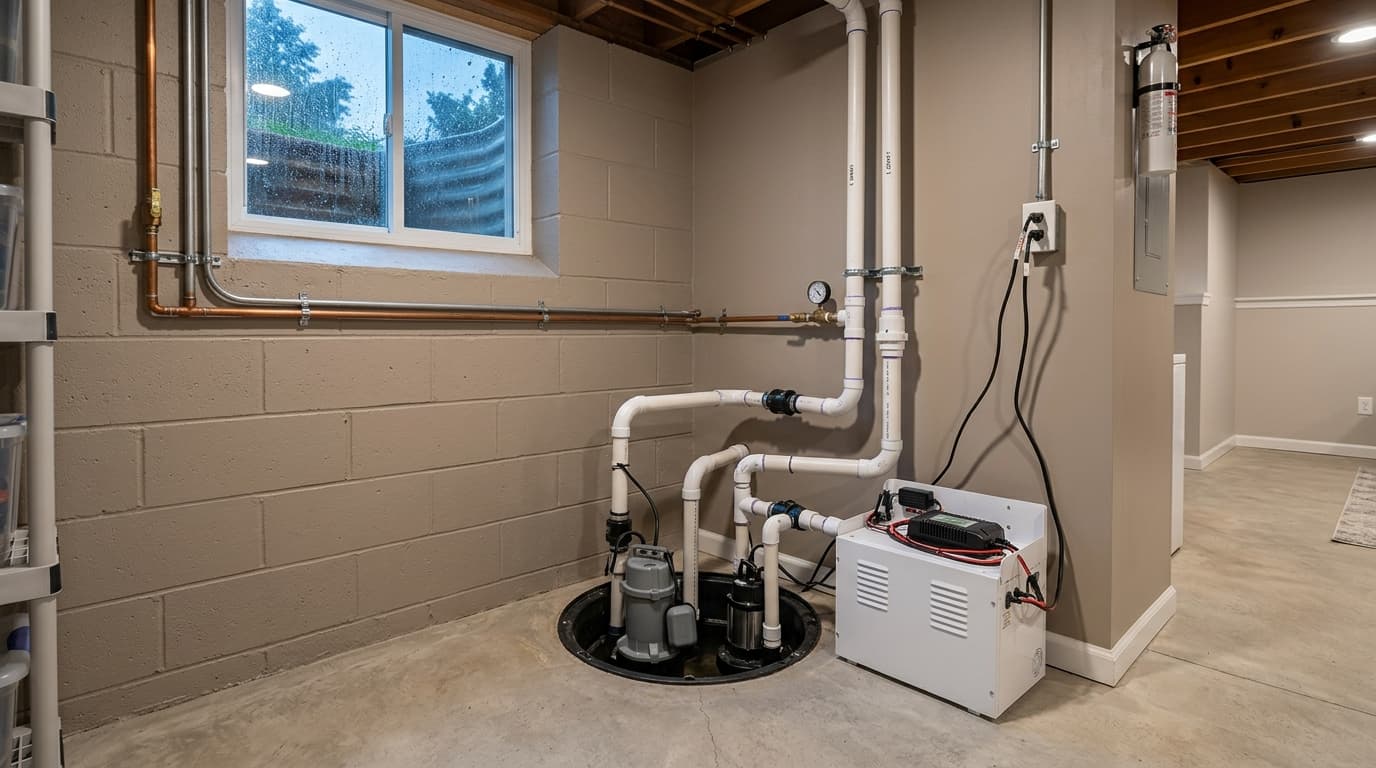
Battery backup: A dedicated backup pump uses a battery when utility power fails. It can suit many homes because it does not require fuel or municipal water pressure. Tradeoffs include finite runtime, battery replacement, charging equipment, alarms, and sizing for the pump head and expected outage. Ask how the battery is tested and how the system reports low charge or pump failure.
Water-powered backup: This type uses municipal water pressure. It can avoid battery depletion during a long outage, but pressure, water-service configuration, local plumbing rules, discharge capacity, and operating cost matter. It will not help if a private well pump loses power. Have a qualified plumber confirm suitability rather than assuming the water line can support it.
Generator-supported pumping: A correctly selected generator can keep the primary pump, backup pump, and other essential circuits operating. It requires safe installation, transfer equipment, fuel planning, ventilation, and regular testing. Never operate a portable generator in a basement, garage, crawl space, or near doors and windows. Carbon monoxide can be fatal. A generator is a whole-home electrical decision, not simply a larger extension cord.
Redundancy Is More Than Installing a Second Pump
A dependable setup separates failure points where practical. That may mean a second pump with its own float, a different power source, an alarm that can be heard or reported remotely, and a discharge route that remains open during heavy rain. Both pumps sharing one clogged outlet, failed check valve, or overloaded circuit is not meaningful redundancy. Ask the installer to show what each pump depends on and what happens when the primary pump is unplugged or the water level rises.
Keep the basin cover, pump, battery, alarm, and shutoff serviceable and reachable. If you plan to finish the basement, preserve access to the pit and equipment and address moisture before framing or flooring. The general contracting team can coordinate access, drainage, framing, and finish sequencing when several scopes meet.
Planning a project in South Jersey?
Get a free, detailed estimate from a licensed NJ contractor — no pressure, no sales pitch.
Know When a Backup Pump Is Not Enough
A backup pump manages water that reaches the basin; it does not repair a failed foundation drain, a leaking wall, a broken water line, or a discharge that sends water back toward the house. If the pit runs continuously, the basement stays wet between storms, or water appears away from the basin, investigate the larger drainage picture. A dehumidifier may manage indoor humidity, but it cannot remove bulk water or correct a structural leak.
Ask whether the proposed work includes exterior drainage, an interior drain or sump basin, foundation repair, plumbing, electrical, or only pump replacement. These are different scopes with different risks. The contractor should explain the observed source, the sequence of work, what will be tested, and which conditions are excluded. Do not let a new pump become a reason to conceal damp masonry, soft framing, mold-like growth, or damaged finishes behind a wall.
If a storm has already caused flooding, keep children and pets away, do not enter standing water near electrical equipment, and do not use fuel-burning equipment indoors. Photograph conditions from a safe location and contact the appropriate qualified professionals. A post-event review can distinguish pump failure from water intrusion, electrical damage, and materials that need drying or removal before repairs begin.
A Sump Pump Backup Decision Checklist
Use these questions to compare systems and proposals:
- Water rate: How quickly does the pit fill during prolonged rain?
- Failure mode: Is the concern power loss, pump failure, blocked discharge, or excessive inflow?
- Power: Is there a dedicated circuit, working GFCI protection, and safe battery or generator wiring?
- Capacity: What output is available at the actual vertical lift and discharge length?
- Discharge: Where does water exit, and will it stay away from the foundation?
- Alarm: How will you know about high water, low battery, loss of power, or pump failure?
- Maintenance: Who will test the float, clean the pit, inspect the check valve, and replace the battery?
- Access: Will equipment remain reachable after insulation, drywall, flooring, or storage?
Require a written scope naming the pump model, backup type, battery or generator requirements, check valves, alarm, discharge work, electrical or plumbing responsibilities, permits, testing procedure, exclusions, and hidden-condition process. New Jersey's DCA Codes & Standards resources are a starting point; the local construction official determines what applies to your address.
Test the System and Protect the Rest of the Basement
A backup is not install-and-forget equipment. Follow the manufacturer's test procedure, check battery condition and alarms, confirm the float moves freely, and inspect the discharge outlet before expected severe weather and after major storms. Keep the pit accessible and replace wear items as directed rather than waiting for an outage.
Also address why the basement gets wet. Keep gutters and downspouts functioning, watch grading, repair plumbing leaks, and investigate wall or floor seepage. The EPA's mold and moisture resources emphasize controlling moisture and drying wet materials; a pump protects against one water pathway but does not make a persistently damp basement ready for finishes.
For a home in Egg Harbor Township, Galloway, Ocean City, or another South Jersey community, local exposure and utility conditions can change the recommendation. Our storm-damage services can help coordinate a post-event review, while our contact page is a starting point for a documented scope. Keep people out of standing water near electrical equipment and call qualified professionals when conditions are unsafe.